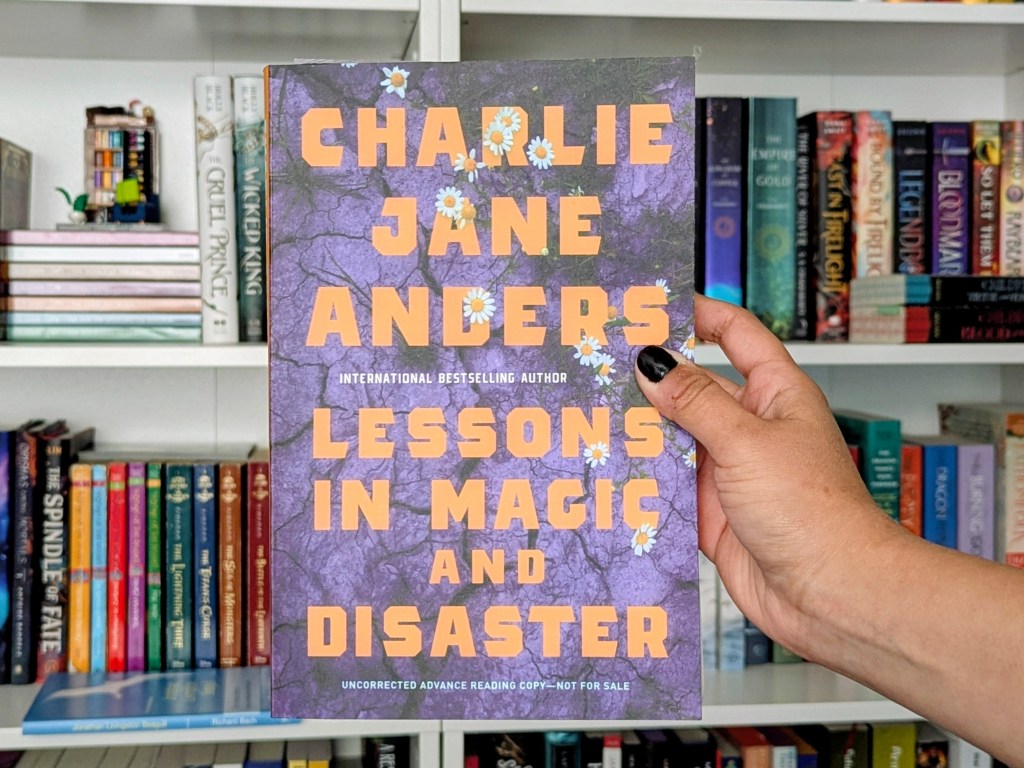
📕 Title: Lessons in Magic and Disaster
✏️ Author: Charlie Jane Anders
📖 Genre: Literary Fiction | Magical Realism
⭐ Rating: ⭐⭐⭐💫
BOOK BLURB
Grad student Jamie spends her days teaching literature and researching 18th century writers for her dissertation, while practicing magic on the side. Jamie decides to reconnect with her grieving mother, Serena, who has kept to herself ever since the death of her wife. In teaching Serena magic, Jamie deals with intergenerational trauma and secrets that Serena has kept from her.
REVIEW
Thank you Tor Books for the advance copy!
I was so intrigued by Jamie’s dissertation research which was based almost entirely on real 18th century authors and works of literature, aside from one fictional novel and imaginary correspondence (as detailed in the Historical Note). I loved the magical realism and the queer interpretation of these people and stories; it really felt like something that could be true.
I’ve cast so many spells, Jamie wishes she could say. In some of the filthiest, most unregarded places on earth, I have focused all of my eldritch power on pleading for a scrap of knowledge.
The magic is unpredictable and questionable in effect; Jamie is often uncertain whether events are a result of her spells or a coincidence, though she proposes that a good spell is one where you’re never sure if it worked. She is wary of even saying the word “magic” as though a mention might make it cease to exist. Jamie’s approach to magic feels antithetical to what Serena hopes to accomplish, wherein lies the predicament.
A major theme of this novel is generational trauma, and the dual timelines highlight the struggles of the queer community who came of age in the 90s and how that trauma affected Jamie’s upbringing. Outside of their queer community, the world is not queer-normative and both Jamie and her parents deal with discrimination and hate.
There is also an exploration of what we owe to one another. Despite Jamie’s rocky relationship with Serena, she feels obligated to reach out a hand, to rescue her mother from grief—even if that means putting her relationship with her nonbinary partner Ro at risk.
Why is it so hard to tell love from obligation? Maybe because humans are not really built to sustain an intense emotion for hours and years, so we need connective tissue to carry us between the moments when we can feel. Or maybe it’s that the people we love always seem to need us at the most inconvenient times.
Ultimately, poignantly, this is a story about love and forgiveness. That no matter how badly we mess up, we will always be loved.
Jamie remembers being little, and Serena saying, You cannot mess up so badly that you will not be loved. Some part of her has carried that promise this whole time.
It feels important to point out that this is a white queer story; the focus is on the queer and trans experiences of white characters. I also felt like some characters felt a bit flat; I didn’t get a lot from Ro specifically and the character voices could have been more differentiated. I didn’t fall in love with this story, but I found value in it and recommend it to those looking for something a bit therapeutic in nature.

 Alicia's Realm
Leave a comment